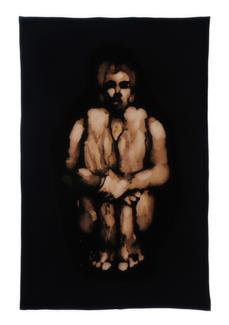
Epithelium Peter de Brito
Dates : Samedi 28 février 2026 - Samedi 11 avril 2026
Vernissage : Vernissage Samedi, 28 février 2026 - 14:00
Adresse : Pórtico Gallery, Travessa Dona Paula, 116 – Higienópolis, São Paulo, 01239-050 São Paulo
Pórtico Gallery
Travessa Dona Paula, 116 – Higienópolis, São Paulo
São Paulo-SP
01239-050
Brésil
Description, horaires...
Pórtico presents, on February 28, 2026, Peter de Brito’s first solo exhibition at the gallery, curated by Claudinei Roberto da Silva. Titled Epitélio [Epithelium], the show opens the gallery’s annual program and continues the artist’s investigation into racist mechanisms operating in multiple ways within society, as well as the memories of the scars that compose this social body.
Trained in biology, physical education, and fine arts, Peter de Brito has developed a practice grounded in technical experimentation and critical reflection on the body, often infused with irony, resulting in works of both poetic and political intensity. “My engagement with sociopolitical causes began to appear naturally in my artistic practice, as a result of a process of immersion in the theme of the body,” the artist states.
Peter conceived the performance A presença negra [The Black Presence] in 2014 in partnership with Moisés Patrício. The action promoted the occupation of galleries and cultural institutions by Afro-Brazilian individuals during exhibition openings. The artist’s own trajectory reflects this context: although he began his artistic career more than 20 years ago, he was only represented by a gallery last year, upon joining Pórtico.
Such concerns emerge in the series Eugenia, in which the artist employs discoloration as a formal procedure. Peter applies bleach to black cotton fabric to reveal images, in a process he defines as “constructive unpainting.” By carefully controlling different concentrations of bleach—using brushes or pouring the liquid directly onto the fabric—he rigorously manages the material’s action time. Forms appear in varying tones of ochre and sepia to compose the skin tones of the depicted figures, depending on whether he sustains or interrupts the chlorine’s action through water baths.
Through self-portraits and family photos, Peter addresses eugenic ideology and its contemporary legacy, manifested in police violence and underrepresentation in leadership positions. In Brazil, Black people accounted for 86% of those killed by police intervention in nine states in 2024, according to the report Pele Alvo: crônicas de dor e luta (“Targeted Skin: Chronicles of Pain and Struggle”) by Observatórios da Segurança.
The artist also references the painting A Redenção de Cam (1895) by Spanish artist Modesto Brocos (1852–1936), frequently cited as a visual translation of Brazil’s whitening thesis. Years after the abolition of slavery, the work aligned with late 19th- and early 20th-century eugenic discourse, proposing the control of miscegenation and the progressive whitening of the Black population.
Epithelium or epithelial tissue
The epithelial tissue—covering internal and external surfaces of the body, such as the skin, and functioning as a protective layer—is invoked in the exhibition’s title. For curator Claudinei Roberto da Silva, the social dermis, corrupted and wounded by centuries of colonial order, nonetheless retains the capacity to heal.
“It is common for healed skin to acquire a different hue from the original, becoming darker or lighter depending on the nature of the wound and the subsequent regeneration process. Individuals, depending on their disposition and class condition, may resort to cosmetic or surgical artifices to mitigate or even erase such marks; but a frayed social fabric cannot be artificially mended,” he adds.
Among the photographic works, the triptych Mimese (2005) shows hands being washed with soap until they fade in color. The piece marks the beginning of Peter’s investigation into bleaching techniques across different supports, ranging from posters and art reproductions to cotton drill fabric, which now serves as the basis for his current research, composed of paintings in both large and small scale.
In À flor da pele (2023), Peter articulates references from two central fields of his trajectory—biology and visual arts. The installation presents a vase with an arrangement of white flowers immersed in black dye that gradually stains the petals, forming a visual metaphor for processes of cultural appropriation and the exploitation of Black labor.
Revisiting extermination policies associated with eugenic ideology, the work Enquanto o seu lobo não vem (2024) reconstructs a hood from the white supremacist Ku Klux Klan movement, onto which eyelashes—referencing the character Emília—are embroidered. The piece therefore engages with the figure of Monteiro Lobato, a writer who was a member of the São Paulo Eugenics Society, founded in 1918.
“I believe these works contribute to many others that foster critique and reflection on the subject,” de Brito concludes.